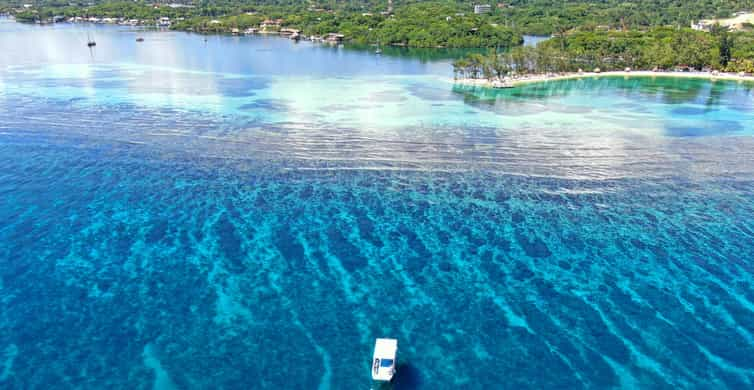
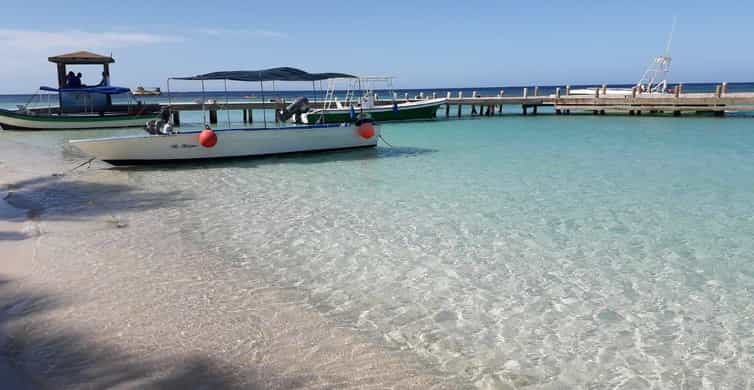
West Bay and Tabyana: the classic Roatán beach
West Bay Beach, at the western tip of the island, is the beach most visitors come for: a long curve of white sand, calm water and coral starting about 10 yards from shore. The southern end has the best snorkeling, while north of the main jetty boat traffic makes swimming far from shore unsafe. It is lined with resorts and restaurants, so food, loungers and watersports are never far away.
The catch is crowds: on multi-ship days West Bay is the busiest place on the island from late morning to mid-afternoon. Tabyana Beach, a beach club on the same sand sold as a cruise excursion, offers loungers, showers and lunch in a package. Read our West Bay guide for snorkeling entry points and timing.
Half Moon Bay and West End
Half Moon Bay, at the northern end of West End village, is a small, sheltered bay with a fringing reef about 650 ft (200 m) out. Enter at the southern end of the beach for the calmest snorkeling, and watch for boats near the docks. Restaurants and bars, including the Sundowners sunset bar, sit right behind the sand.
The rest of the West End waterfront has only narrow strips of sand between docks. The village is the place for diving, dinner and nightlife, and West Bay is a 10-minute water taxi ride away for a longer beach.
The north and east: Sandy Bay, Camp Bay and Paya Bay
Along the north coast east of West End, Sandy Bay is a residential area with dive resorts rather than a beach destination, and it has little in the way of swimming beaches, so it suits divers better than sunbathers. See Sandy Bay.
Far to the east, in Santos Guardiola municipality, Camp Bay is a long, largely undeveloped beach backed by coconut palms, with a handful of small restaurants and places to stay and very few facilities. It is about 1 h 30 min by car from West End, the last stretch on rougher roads, so bring water and food and arrange your return ride in advance. Paya Bay, nearby, is a resort on a bluff above two small coves; parts of the property are clothing optional, and visits by non-guests need to be arranged with the resort. More in the east end.
Cruise-port and private-island beaches
Mahogany Beach at Isla Tropicale, formerly Mahogany Bay, is the beach inside Carnival's cruise port at Dixon Cove, reached on foot or by chairlift. It is for passengers whose ship docks there; see our Mahogany Bay guide.
Two small private islands off the south coast work as day-trip beach clubs, mainly for cruise passengers: Little French Key, off French Harbour, and Maya Key, in the harbor at Coxen Hole, both sold as day packages with beach facilities. For uninhabited islands and quieter reefs, consider a full day at Cayos Cochinos, a protected group of islands between Roatán and the mainland.
Free beaches vs. day passes
The sand on Roatán's beaches is open to everyone, and West Bay, Half Moon Bay and Camp Bay cost nothing to visit. What costs money are the facilities: there are no public toilets, showers or lifeguards on West Bay, and loungers, umbrellas and restrooms belong to hotels and restaurants. Most let you use a lounger if you buy food and drinks; ask what the minimum spend is before you sit down.
Resort day passes are the other option. Infinity Bay Spa & Beach Resort, with its oceanfront infinity pool on West Bay, is the best known, and day passes sold through tour sellers typically include loungers, pool access, Wi-Fi, restrooms and showers, sometimes with drinks or a meal. They suit families who want a pool and a base for the day, and cruise passengers who want transport arranged.
Sand flies, sun and reef etiquette on Roatán beaches
Sand flies, tiny biting midges that live in the sand, are found on most Roatán beaches. They bite most on still days and early and late in the day, and their bites can itch for days. Use a repellent with DEET or picaridin, reapply it after swimming and lie on a lounger rather than on the sand; raked resort beaches tend to be better.
The reef along the shore lies within the Bay Islands National Marine Park. Do not stand on or touch coral, do not take or buy coral or shells, and use reef-safe sunscreen; the nonprofit Roatán Marine Park campaigns against oxybenzone and five other filters and asks visitors for a voluntary $10 reef fee. Average highs are 79-84 °F (26-29 °C), and the wettest months are October and November; see Roatán weather.
Which beach for whom
First-timers and cruise passengers with a few hours should choose West Bay, early in the day if possible. For snorkeling from the shore, head to the southern end of West Bay or to Half Moon Bay. Families with small children do best at West Bay's calm water or with a resort day pass that includes a pool, while passengers docked at Isla Tropicale have Mahogany Beach a short walk from the ship.
For quiet and local life, rent a car and drive to Camp Bay. If you stay a week, combine West End evenings with West Bay mornings and a day on a boat; browse boat trips and compare areas in where to stay.
Frequently asked questions
What is the best beach in Roatán?
West Bay Beach is the most popular, with white sand, calm water and snorkeling from the shore. It gets crowded on cruise days, when Half Moon Bay in West End or Camp Bay in the east are quieter alternatives.
Are the beaches in Roatán free?
Yes, the sand is open to everyone. Loungers, showers and toilets belong to hotels and restaurants, which usually ask for a purchase or a day pass.
Which Roatán beach is best for snorkeling?
The southern end of West Bay, where coral starts about 10 yards from shore, and Half Moon Bay in West End. Stay inside buoyed areas because of boat traffic.
Does Roatán have sand flies?
Yes, on most beaches. Repellent with DEET or picaridin and lying on a lounger rather than on the sand help, and they bite less when there is a breeze.
Can you use Mahogany Beach if your ship docks at Coxen Hole?
Mahogany Beach at Isla Tropicale is inside Carnival's port and is meant for passengers of ships docked there. Passengers arriving at Town Center usually go to West Bay instead.